
Your code.Already in context.
A context manager for your engineering team. It indexes your repositories, internal libraries and design decisions, then gives the coding model the files and conventions each change needs.
Your source code stays with you.
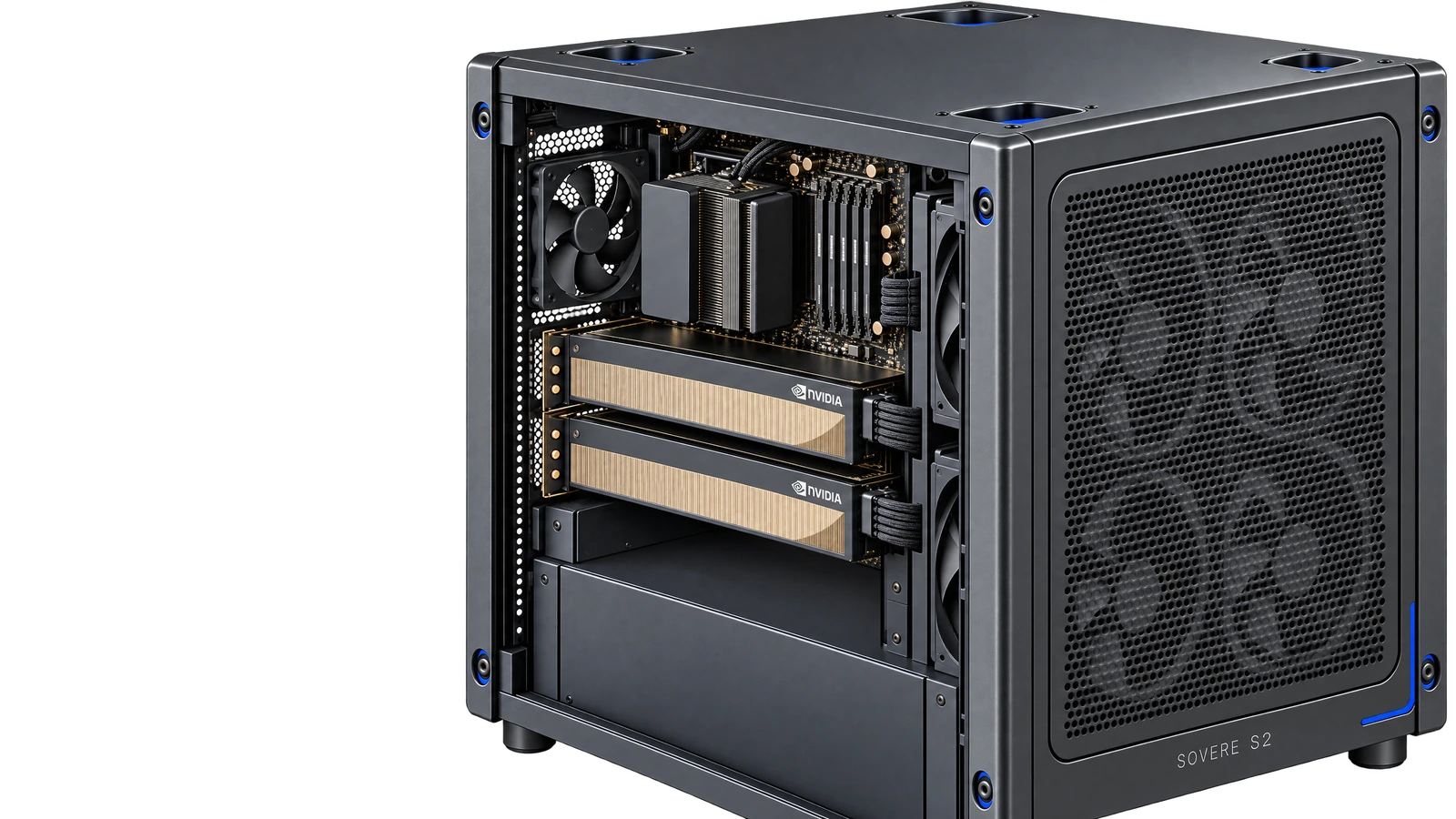
Designed for
regulated work.
Close to Claude Opus 4.8.
Tested on your work.
Published coding scores against Claude Opus 4.6 and 4.8. We also compare Sovere and Claude on 20 of your own tasks.
Published model scores · Higher is better
| Benchmark | 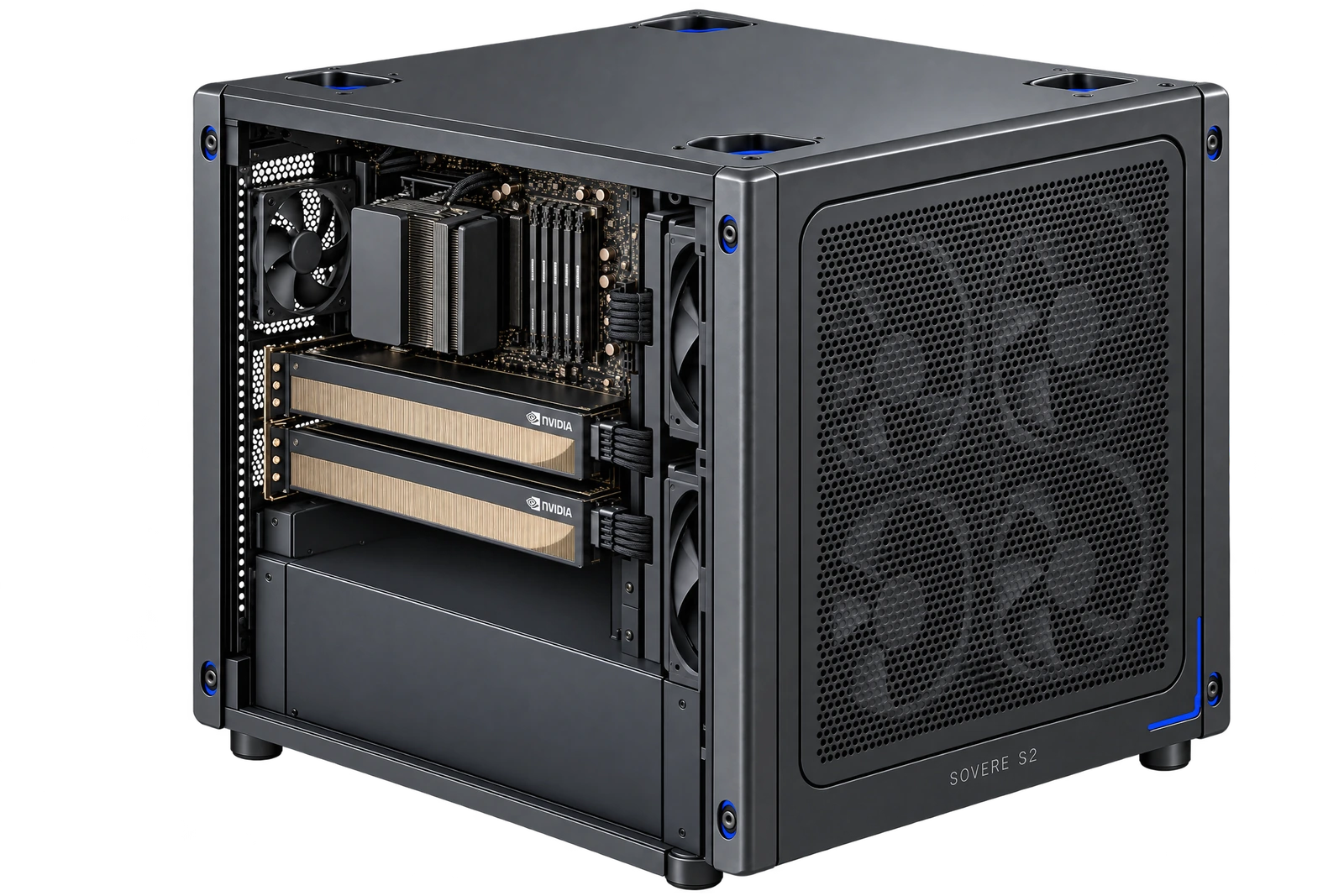 Sovere on S2Qwen3.8-27B NVFP4 | Claude Opus 4.6Anthropic | Claude Opus 4.8Anthropic |
|---|---|---|---|
| SWE-bench ProFix real problems in large codebases | 61.7% | 53.4% | 69.2% |
| Terminal-Bench 2.1Engineering tasks in the terminal | 74.0% | —Not published | 74.6% |
| Where it runsThe same model as above | 1 GPUIn your building | CloudOn the provider’s servers | CloudOn the provider’s servers |
| Sovere on S2Qwen3.8-27B NVFP4 | Claude Opus 4.6Anthropic | Claude Opus 4.8Anthropic |
|---|---|---|
| SWE-bench ProFix real problems in large codebases | ||
| 61.7% | 53.4% | 69.2% |
| Terminal-Bench 2.1Engineering tasks in the terminal | ||
| 74.0% | —Not published | 74.6% |
| Where it runsThe same model as above | ||
| 1 GPUIn your building | CloudOn the provider’s servers | CloudOn the provider’s servers |
Models, sources and methodology
Sources: SWE-bench Pro published by Qwen (Qwen3.8-27B model card, full precision, August 2026). Terminal-Bench 2.1 published by NVIDIA for the NVFP4 version Sovere runs (September 2026). Claude Opus 4.6: Anthropic, 16 April 2026. Claude Opus 4.8: Anthropic, 28 May 2026. A dash means the maker published no score.
The open models inside Code
Qwen3.8-27BWrites, fixes and reviews code.
Gemma 4 31BChecks the work. A second opinion.
GLM-4.7-FlashCompletes code as you type.
Built for the way
your team builds.
Build features using your existing patterns and internal libraries.
Use it all day.
No bill per token.
Sovere already knows your code, so a change reads 3 files, not 40. Included models have no per-token charges.
For scale: at Uber, heavy users of AI coding tools cost up to $2,000 a month each. Forbes, 17 May 2026.
It starts with
your codebase.
Sovere indexes your repositories into a map of code, dependencies and design decisions. When someone asks for a change, the coding model starts with the relevant files and conventions instead of searching and re-reading the codebase.
- Repositories
- Internal libraries
- Engineering standards
- Design decisions
Approved repository changes refresh that context, so your team spends less time explaining the same code again.
How Sovere software worksYour complete system.
Ready in eight weeks.
We adapt the pre-built model to your approved data and test it on your tasks before delivery.
Connect approved data, configure the workflow and agree the rules for your environment.
Eight weeks from your order to an installed, working Sovere system in your building. We agree the scope and delivery date before you order.
Works with the tools
you already use.
- Claude Code
- Codex
- Cursor
- Antigravity
- GitHub Copilot
- JetBrains
- Zed
The right model.
The right system.
Code runs on the S-series configurations below. We’ll size the system around your workload.
- NVIDIA GPUs
- 2
- GPU memory
- 192 GB
Recommended starting point
Sovere S2
A focused starting point for lighter coding assistance.
- HardwareOne-time payment
- €44,735
- Software, model setup & first-year serviceIncluded in your initial purchase
- €97,522
- Total initial purchaseComplete system + first service year
- €142,256
- Annual managed AI serviceModel improvements, optimisation & support
- €107,363per year, from year 2
About Code.
No. Code starts with an existing coding model and a prepared workflow. We connect approved repositories, adapt the system to your standards and test it on representative engineering tasks.
The coding model starts from a short brief: the component, the styles and the conventions involved. It skips the search and the re-reading, where most tokens go. Savings are largest on front-end, design and data work; backend edge cases still need fresh reasoning.
Yes. Claude Code, Codex, Cursor and other tools that can use a custom model endpoint connect through a standard model API. Supported features depend on each tool, and we confirm your tools during scoping.
The knowledge graph connects and refreshes repository context. Changing model weights is a separate process, used when it improves the agreed task. Your deployment scope makes that distinction clear.
Sovere hardware is the standard deployment. We can assess your own infrastructure against the model, GPU capacity, security requirements and integrations before agreeing a supported configuration.
We agree a set of real tasks from your codebase and evaluate correctness, tests and adherence to your standards. Any comparison with another model uses the same tasks and documented conditions.
Yes. Newer cloud models, such as Claude Opus 5, score higher. For the rare task that needs one, you can keep a cloud model. Sovere sends it only the brief the task needs. We test new open models as they come out, and your team decides when to switch.
Your team retains the review process. We agree repository access, permitted actions and approval gates as part of the setup.
Bring the repository.
We’ll bring the AI.
Start with a real engineering task. We’ll scope the workflow, evaluation and system to run it.